
Confirm the repair basis
A survey, engineer’s information or project specification should identify the cause, extent and intended treatment before work is mobilised.
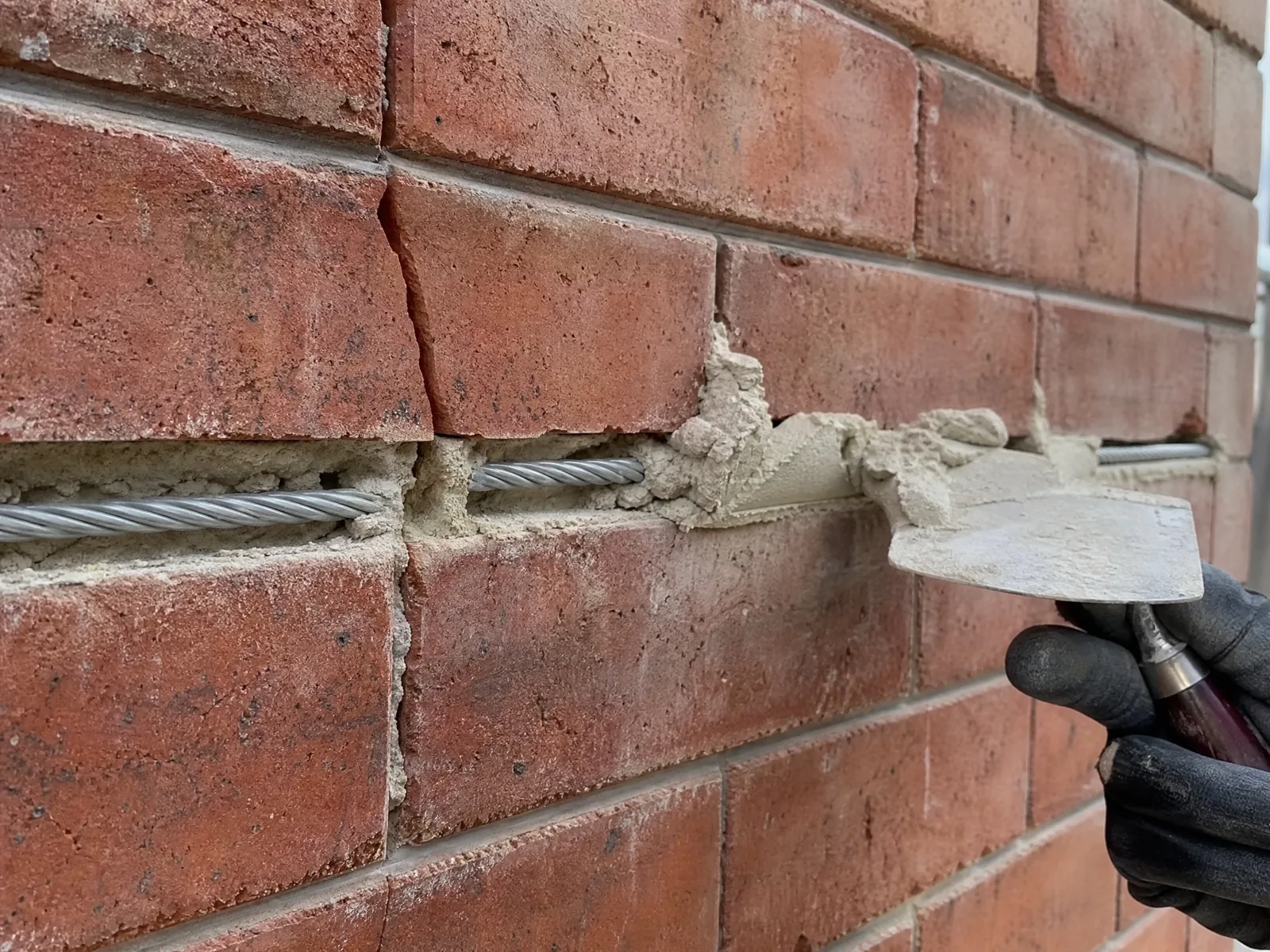
Masonry repair coordination
Contractor delivery of defined structural masonry repairs, with engineer-led details, historic fabric protection and recorded crack-stitching work.
Discuss the proposed scopeHero image: AI-generated, non-local illustration; not a photograph of our work.
Structural masonry repair addresses defined defects after their cause and suitable treatment have been assessed. Grade 2 Listed Pointing delivers agreed masonry repair scopes alongside the appointed team. Structural diagnosis and repair design remain with the appropriate appointed professionals.
Cracking, movement, failed lintels and local instability in historic masonry need a clearly defined repair response. The causes, extent and structural implications should be understood before a masonry contractor begins work.
Grade 2 Listed Pointing delivers defined masonry repair workstreams alongside the relevant project team. Engineering diagnosis and design remain with suitably appointed professionals; our role is to help make the agreed repair practical, compatible and carefully delivered on site.
Cracking, movement, failed supporting elements and local instability are reasons to obtain appropriate assessment, not remotely diagnosed causes. A crack pattern or photograph alone cannot determine the right repair.
Provide available investigation, monitoring and engineer information before the contractor work package is defined. Do not treat a joint repair or surface patch as confirmation that the structure is safe.
Crack stitching reinforces masonry across a crack using a specified system, commonly bars bonded into prepared joints or slots. Its suitability depends on the cause of movement, masonry condition and professional repair detail.
It is not a universal treatment for every crack and does not replace investigation. Bar arrangements, materials and detailing belong in the site-specific design, not a generic online recipe.
The handover should identify agreed locations and details, retained-fabric protection, access, opening-up, sequencing and related repairs. Temporary works require clearly assigned responsibility; contractor delivery does not imply an in-house engineering design service.
Record unexpected conditions and refer changes back to the appointed team before extending the work. Photographs, agreed details and location records help distinguish the specified scope from site discoveries.
Use the minimum necessary intervention and materials compatible with the retained wall and agreed engineering approach. Consider reinforcement and the final mortar joints together, rather than treating the historic masonry as a generic modern wall.
Structural repair can affect special character and appearance. Confirm the proposal with the local planning authority and appointed advisers before work starts; neither a structural need nor the word repair automatically removes consent requirements.
Actual project location: Chelford, Cheshire. The published bridge record includes crack-stitching repair within a wider package of brick cleaning, corroded-brick replacement, conservation lime mortar pointing, tinting and repointing.
That record supports a factual example of the work performed. It does not establish an independently measured stabilisation outcome, contractor design authorship, a statutory listing grade or suitability for a different defect.
Review the bridge project’s documented scope.
Supporting delivery principles
A survey, engineer’s information or project specification should identify the cause, extent and intended treatment before work is mobilised.
Access, opening-up, local rebuilds and repair materials are considered in relation to the retained masonry and wider building context.
The contractor, architect, conservation adviser and structural engineer have distinct responsibilities that should be clear in the project information.
Photographs, agreed details and site records can support a clear handover for the defined work package.
For project teams
Frequently asked questions
This page describes contractor delivery support. It does not provide structural engineering, legal, planning or formal heritage-consultancy advice.
A condition review can identify practical masonry issues, but the cause and design of structural repairs should be confirmed by the appropriate appointed professional where required.
It may, depending on the building and the intervention. The local planning authority should be consulted about the specific proposal.
Repair materials and details need to work with the existing construction and the agreed engineering approach. Historic masonry should not be treated as a generic modern wall.
No. The cause of the defect, masonry condition and proposed intervention need assessment before a site-specific treatment is selected. Crack stitching may form part of an agreed repair but does not replace investigating movement.
Repointing repairs mortar joints. Where movement is suspected, its cause and any structural repair should be assessed before the masonry scope is agreed. Renewing joints alone is not a cure for the underlying cause.
This service is contractor delivery of defined masonry repair scopes. Diagnosis and design remain with appropriately appointed professionals. Share existing reports and details to discuss the practical work package.
These sources inform the general repair principles. They are not endorsements of the business or approval of a particular project.
Related information
Explore repair-led treatment of localised masonry fabric.
ExploreSee the information that helps coordinate a complex masonry scope.
ExploreUse the project-team checklist before discussion.
ExploreUse the unit-repair route for face loss and matching.
ExploreSee the published crack-stitching scope.
ExploreReview existing coverage, not branch locations.
ExploreA concise answer
Structural masonry repair addresses defined defects after their cause and suitable treatment have been assessed. Grade 2 Listed Pointing delivers agreed masonry repair scopes alongside the appointed team. Structural diagnosis and repair design remain with the appropriate appointed professionals.