
Masonry care
Brick Spalling on Historic Buildings: What to Review First
A practical guide to reviewing spalling brickwork on listed and historic buildings, including moisture, freeze-thaw action, salts, mortar compatibility, condition records and repair scope.
Spalling describes the loss or flaking of a brick face. It is a condition to investigate, not a diagnosis in itself: moisture, freeze-thaw action, salts, very soft or under-fired units, inappropriate mortars, earlier repairs and wider defects can all be relevant to the scope that follows.
This guide provides general project information. It is not legal, planning, structural-engineering or formal heritage-consultancy advice. Confirm project-specific requirements with the relevant authority and appointed advisers.
Record the condition before selecting a repair
Start with marked-up photographs that show both the close-up loss and the wider elevation. Record whether deterioration is isolated or repeated, where it occurs in relation to gutters, copings, ground levels, joints and other features, and whether there are associated cracks or open mortar joints.
Historic England notes that damp walls can lead to brick damage through freeze-thaw action or salts reaching the surface, while soft or under-fired bricks and inappropriate mortars can also contribute to decay. The practical next step is to identify the relevant building context rather than assume a generic treatment.
- Extent and pattern of face loss or flaking
- Evidence of moisture, rainwater defects or saturated masonry
- Associated failed joints, cracks, coatings or earlier repairs
- Whether the brick remains sound enough to retain, repair or assess further
Address causes as well as visible loss
A local repair is unlikely to be durable if moisture management or another underlying condition is left unresolved. Rainwater goods, drainage, copings, flashings, ventilation, ground levels and adjacent impervious materials can all need consideration by the appropriate project team.
Where cracking, bulging, leaning or other indicators of movement are present, the cause and any structural repair design should be confirmed by an appropriately appointed professional before a masonry repair programme is agreed.
- Rainwater management and drainage
- Moisture movement and drying conditions
- Compatibility of existing mortars, renders or coatings
- Engineering or specialist advice where movement is suspected
Keep the intervention proportionate
Historic England advises that repairs to old brick walls are often local: repointing and replacement of some bricks may be required, but it is rare that an entire wall needs rebuilding. The agreed scope should distinguish retained sound fabric from units that genuinely need local intervention.
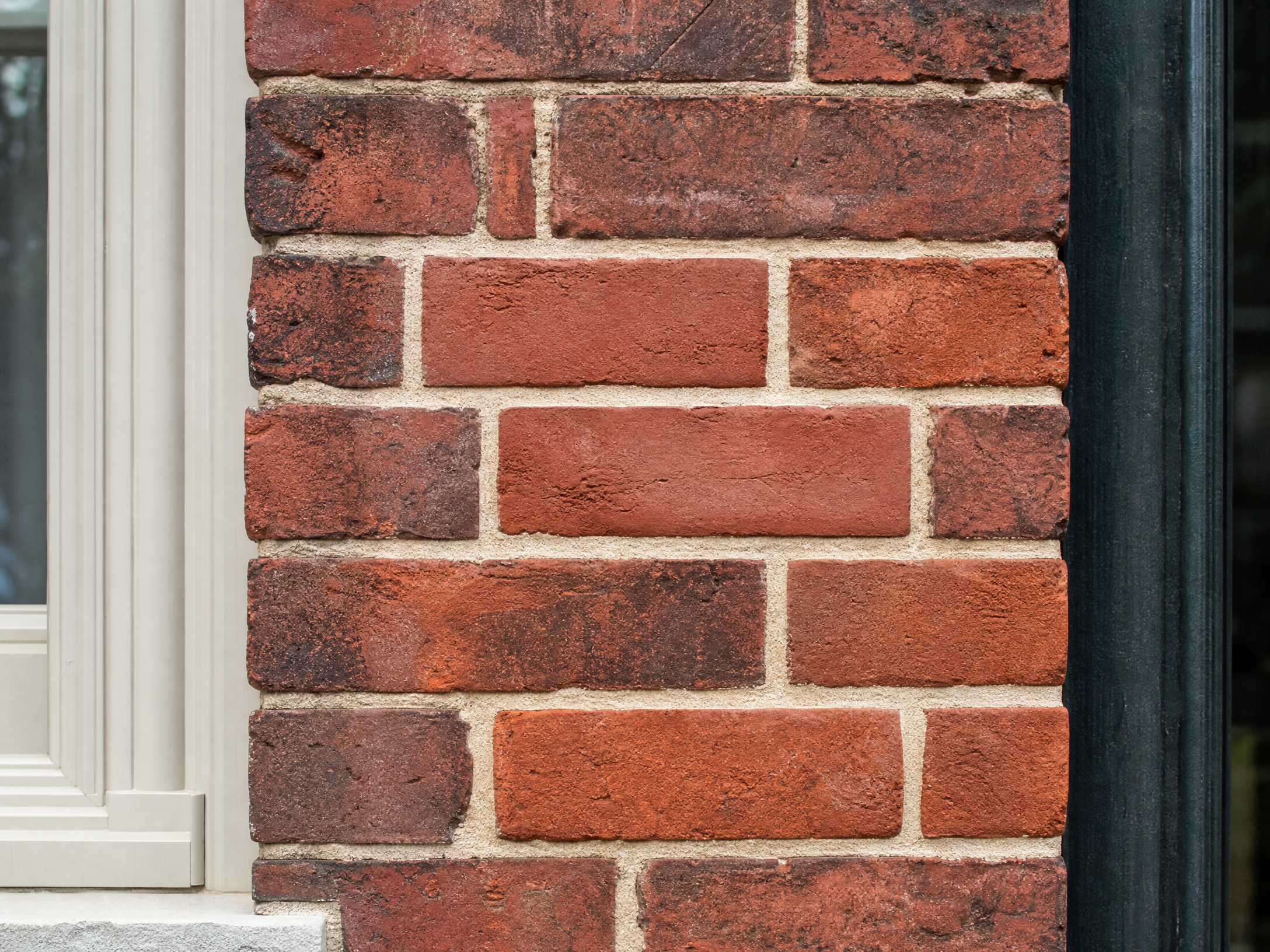
When replacement or repair materials are proposed, review their size, texture, colour, finish and relationship to nearby mortar in the context of the full elevation. Samples, records and retained comparison areas can help the team assess the intended result.
- Retention of sound historic brick
- Local repair or replacement thresholds
- Matching and review of proposed new material
- Coordination with pointing, cleaning and access work
Common questions
Points to clarify for your building.
Is spalling brickwork always a structural problem?
No. Spalling can be associated with weathering, moisture, salts, mortar compatibility or the characteristics of the individual brick. However, cracking, bulging, leaning or other movement indicators should be referred to an appropriately appointed professional.
Should every spalled brick be replaced?
Not necessarily. The decision should follow the condition of the individual unit, the extent and cause of deterioration, its contribution to the elevation and the agreed repair objective. Retaining sound historic fabric is usually an important starting point.
Can repointing be part of a spalling-brick repair scope?
Yes. Failed or unsuitable mortar, open joints and brick condition can be related. Repointing, local brick repair and any moisture-management work should be planned as connected parts of the masonry workstream.
Need to discuss a project-specific masonry scope?
Share the building, proposed work and project context. We can help identify the practical information needed for a useful initial discussion.
Related information